There was a time when market shelves were filled with paper, plastic, and aluminum food packaging. No doubt it used to look so satisfying, and it kept the food fresh and protected to some extent. But then we noticed that slowly and gradually things started to shift.
Market Reality: Transportation expenses are reaching 40% of total company earnings for many food brands, while inflation has simultaneously increased labor costs, energy costs, and tariffs, all cutting directly into profit margins.
The margin pressure in food packaging increased, and the protection and freshness of food were compromised. Moreover, the eco-friendliness and sustainability decreased, which led to landfills and environmental pollution. Then, many packaging brands shifted their interest from these bad-quality materials to high-quality and eco-friendly material options. This is just not a sudden change. It took a while to take place. But it happened?
No one is thinking about the main reason why shifts are increasing. Well, the simple answer is due to the price, quality, and biodegradability of raw materials. Materials like paper, plastic, and aluminum are becoming really expensive and going out of hand. And the high price has become a nightmare for the food brand. This is because transportation and shipping costs and expenses are reaching 40% of the company's total earnings. And this means a big part of the money made is spent just on transportation.
And this is not the end; at the same time, competition is growing fast between the companies' “privately labeled brands.” They're offering cheaper, eco-conscious, and high-quality packaging. And they are providing all this to their customers at lower prices as well. Do you know that they provide fast delivery and eco-friendly materials? We know that inflation has increased labor costs and energy costs, and there are tariffs that have added extra expenses. All these factors are cutting into profits.
But why not go for materials, which can become a win-win situation for you and your customers?
So just imagine that you're a food company that uses custom boxes, pouches, jars, bottles, or containers for food storage. And your business is also facing the issue related to packaging, where you want to cut costs. And also want to deliver to your customers eco-friendly and eco-conscious materials, which can protect your food and keep it fresh. It should also give you a very profitable margin. Then, in this situation, you need to change a few things, and you must work smarter. You can invest in materials that are more eco-friendly and sustainable.
In this comprehensive blog, we will understand how these materials can protect your brand image in the food market. And how can you increase your customers' experience when you serve your delicious and yummy food to your eco-conscious customers in environmentally friendly materials? You will be directly winning their trust as a food brand.
Moreover, this will bring you strong brand recognition as a responsible brand that thinks about the environment and the planet. And in this way, you can take a competitive edge over your competitors in the market.
"Food packaging material" is a term that refers to any material that is used to protect and preserve food products. It provides safety to your food from the point of production to the point where it is eaten.
It has the main function of protecting your food from contaminants and increasing shelf life. It also increases your brand's appearance and the trust of your customers. A food packaging material is used to protect your food from damage, air, moisture, bacteria, and other contamination. Moreover, it shares some important information like expiry dates and ingredients.
There are many different types of materials available in the market, like paperboard and cardboard, plastic, glass, metal, biodegradable materials, and much more.
| Packaging Material Comparison | |||
|---|---|---|---|
| Material Type | Barrier Strength | Sustainability | Cost Effectiveness |
| Paperboard | Low | High | High |
| Cardboard | Medium | High | High |
| Plastic | High | Low | Low |
| Glass | High | High | Low |
| Metal | Low | Medium | Low |
| Biodegradable Packaging Materials | High | High | High |

It is not like people have always used paper and cardboard packaging or eco-friendly and sustainable materials. There were different experiments that were done to reach the right type of food packaging material. In history, it is found that people started from scratch and reached the point where we stand now.
In the early days, people used natural materials like leaves, animal skins, clay pots, and wooden containers to store their food. These were very common methods of keeping their food safe, but they were not long-lasting.
Then glass and metals were introduced, and there are traces in history that Egyptians used to use glass material, such as glass jars and bottles, to store their liquids and preserve food. Metal cans were introduced later on, and they provide longer durability for keeping food fresh.
But the main evolution took place in the 20th century when paper and cardboard packaging became very popular. The main reason to use them was that they were very lightweight and they were easy to print. Many brands started using them for branding and labeling.
After that, plastic packaging came into being and changed everything. People started to use plastics because they were cheaper than any other kind of packaging material. They were flexible and created ways to keep food fresh. And this was the time when food pouches, wraps, and containers were introduced, and people started to use them widely.
But now, with the effects of the greenhouse effect and other environmental changes, the focus is again shifting. Companies are moving towards eco-friendly and sustainable materials like recyclable paper, biodegradable plastic, and reusable packaging to protect their environment.
Food packaging is not just about keeping the food inside a box. It is about protection, preservation, and increasing the quality. Throughout the whole process, from manufacturing to distribution.
Researchers and food safety organizations have confirmed that there is a link between packaging and factors like spoilage, contamination, and waste.
You can reduce food wastage by as much as one-third of produce by using appropriate and proper material packaging.
When your food is packed in the right food packaging material, it protects it from physical damage during handling and transportation. Moreover, it offers protection from unwanted impact without causing any damage to food.
When your delicate foods, like berries and eggs, are not packed correctly, they can get cracked, bruised, or damaged.
According to studies, “Unpacked food can decay up to 85% faster as compared to properly packed items, according to the controlled storage studies.”
There are some materials, like molded pulp resin corrugated cartons, that are recommended for keeping your products damage-free. Because they are best at shock absorption. And in this way, you can reduce waste from breakages.
If you want to prevent your food from contamination, then you need to keep it in a packaging material that keeps it protected from external contamination. In this way, you fulfill your primary food safety responsibility.
Packaging protects from bacteria, mold, dust, and other particles. Moreover, when you pack your food in sealed packaging, it decreases the risk of foodborne illness as well. There are advanced materials, like vacuum and modified atmosphere packaging, that provide your food with an internal gaseous environment that slows spoilage and bacterial growth.
When temperature changes, some perishable foods become more susceptible to spoilage and microbial growth. Food packaging that provides thermal protection always keeps products safe for long-term storage and during shipping and transportation.
You can use temperature-controlled packaging and barrier materials, which can help reduce temperature-related wastage in meats, dairy, and frozen foods.
Have you ever wondered what the reaction of your customer will be when they find their food pre-opened or altered?
The answer is very straightforward. It will readily decrease your brand's customer trust and satisfaction.
Moreover, in the medical industry, it is very important to keep medicines safe from tampering and alteration. So, tamper-evident features like seals, bands, and safety caps make sure that your bottled beverages, baby foods, and high-end meal kits reach your customers with quality and safety measures.
The main culprits behind oxidation of fats and oils, vitamin degradation, or texture and flavor loss are light, moisture, and oxygen when you use a packaging material that provides stronger barrier properties, such as aluminum foils and multi-layer films.
You can actually help your food maintain its flavor, nutrients, colors, and freshness over a longer period of time.
There are many examples that we have discussed earlier, like glass jars that have been used by ancient Egyptians for saving honey, sauces, etc. So you can always go for eco-friendly materials to keep your food products safer. They preserve them better. You can maintain their quality and taste.
There are many brands that have made a wise decision to switch to glass or paper-based packaging. Because they have experienced in real time that this has increased their perceived value, moreover, it is cost-efficient and offers you a very long-term trust from your customers. So we can all agree that the right food packaging material increases your sales without changing the product itself.
Other than this, there are several other advantages for your business mentioned below.

You can increase the shelf life of your food by using a material for packaging that suits the food. Scientific studies have confirmed that using optimized packaging increases the usable life of many foods.
There was a study conducted that showed that properly portion-packed and better sealed cheese and ham products can last up to 33% longer than unpacked or conventionally packed foods. [Report Credit: IJSRMME]
This means that you can deliver your food fresh to your customers' homes and in retail if you use the right type of packaging material, reducing food waste.
There are many people who deserve to be served food in every country. There are many restaurants in the USA alone that discard the wasted food on a daily basis.
There is a study that shows that without proper packaging. Your food gets wasted, and up to 25 to 30% of food produced globally spoils due to packaging problems and storage conditions. And most of the time, the food spoils during transportation and shipping.
So you can decrease your food wastage by using effective packaging material, which can result in generating more profit.
There's one major problem that every brand faces in the supply chain: efficiency. During longer travels, the food gets spoiled and wasted. So it is very important to choose the right food packaging material, which can help you decrease the damage and increase the traveling efficiency of your food.
So you should always prefer strong and protective packaging, which reduces breakage, leakage, and spoilage during transportation and storage. If you choose the right packaging material wisely, you can decrease your shipment rejections. And you can obviously increase your order rates, which will reduce your operational losses.
Many studies suggest that the fruits are packed in ventilated corrugated boxes, most importantly with molded pulp trays. They stay fresh and experience fewer bruises compared to loose or poorly packed produce. After conducting extensive research, our experienced and expert team concluded:
“In business, better packaging material is equal to smooth shipping and transportation. This obviously increases your revenue and decreases your damage cost.”
Eco-friendly food packaging materials are perfect in terms of affordability and ease of use. They are lightweight and also adaptable, which means that you can customize them according to your convenience.
They help you reduce your shipping and storage costs as well. They are customized for easy opening, resealability, and stackable designs. In this way, you can increase your user-friendly packaging without increasing the overall cost.
Packaging directly influences customers' buying decisions. We always say that the material that you choose for food packaging is not only for wrapping your food product. But you are choosing a material that can maintain the freshness, quality, and safety of your products. In this way, you can increase your brand value in the market.
“Moreover, our experience with 5000-plus brands has consistently shown that consumers always go for well-sealed and premium-looking packaging. Even if they go for a single piece of apple.”
There are different types of food packaging materials, but you can choose your material based on your food product type. We have discussed the main types of materials with their subtypes. You can choose your type according to your preference.
90% of Americans are against plastic packaging material, but do you know what? It can be useful for you. We can use it as a blessing in disguise because this material has several benefits.
It provides an excellent moisture and air barrier to your products.
It extends the shelf life. It is easy to mold.
You can customize it in different shapes and sizes.
Moreover, it has a low transportation cost.
Well, most of us think that plastic only contributes to landfills and water pollution, but this is not completely true. The main culprits are improper disposal and weak management systems. Due to these, this useful material is not liked by anyone. But we can change this trend by properly recycling and reusing it.
You can use this flexible packaging material in your snack packaging, frozen food bags, bottles and containers, food trays, and wraps. It has several other types like

It is the most common plastic that is used in food packaging. It is lightweight, flexible, and food safe. It keeps your food product moisture-free and maintains its freshness.
It is used for plastic bags, food wraps, pouches & Mylar bags, and squeeze bottles.
It is a very soft, flexible type of polyethylene. It is very easy to seal and stretch. Most of all, it is moisture-resistant.
It is used for bread bags, frozen food bags, and cling film.
It is a strong and rigid form of polyethylene. It is tough and impact-resistant and protects the food very well.
It is used for making milk bottles, juice containers, and food storage tubes.
This material is very flexible and has a strong type of plastic that is used in food packaging. It is used due to its excellent stretchability and puncture resistance properties.
Moreover, it is used for making wrap bags and liners due to its moisture protection. They are perfect for keeping your food fresh, and they are very lightweight and cost-effective as well.
This material is used for making food trays and cups, which are used in takeaways. This is lightweight and has excellent insulation. They can keep hot food warm and cold food cool.
Moreover, it provides cushioning and protection to your food and helps prevent damage during shipping and transportation.
It is a heat-resistant plastic that is ideal for hot foods. It can bear high temperatures very well and does not crack easily.
This material is used for microwave-safe containers, yogurt cups, and takeaway boxes.
It is a strong, clear plastic film that is used in food packaging. It is stretched in two directions, due to which its durability and resistance to moisture increase. Moreover, it keeps your food fresh and increases the shelf life of your product. It is perfect material for printing and branding due to its glossy surface.
PET is a clear and strong plastic that is commonly used for beverages. It is a very lightweight, transparent, and recyclable material.
It is used to make water bottles, soft drink bottles, and salad containers.
It can be rigid or foam-like. It depends on its form. It is used because of its very low cost and good insulation for hot and cold foods.
It is used for making disposable bowls & cups, food trays, and takeaway containers.
PVC is a durable and flexible plastic that is used for making cling film. It tightly seals the food and keeps it fresh.
It is also used for making PVC food bags, food wraps and stretch films.
Nylon is a durable and strong plastic that is used for making food packaging. It provides a good barrier against oxygen and smells. Moreover, it is extremely resistant to punctures, heat, and chemicals. It keeps your food fresh for a longer period of time.
Moreover, it has different types, PA6, PA666, and PA11, which are different from each other based on flexibility, strength, and temperature resistance. Nylon is ideal for vacuum packs, meat packaging, and frozen food packaging.
PA6: It is a strong and lightweight nylon plastic. It has better strength, flexibility, and resistance to wear, chemicals, and heat.
PA66: It is a high-performance nylon plastic. It has superior strength, stiffness, heat resistance, and excellent wear durability compared to PA6.
PA11: It is a bio-based nylon that is made from castor oil. It has flexibility, chemical resistance, and excellent performance in harsh and low-temperature environments.
Ethylene vinyl alcohol EVOH is a high-performance barrier material. It is used as a thin layer in multi-layer food packaging due to its ability to block oxygen, which prevents oxidation. And due to this, this material perfectly preserves flavor and extends shelf life. It is used for packaging meat, dairy, sauces, and ready-to-eat foods.
Multilayer packaging is made by combining two or more materials to provide better performance. It provides strong protection against air, light, and moisture.
That is why it is used for making jars, bottles, crates, trays, tubes, cups, chips, packets, coffee pouches, and juice cartons.
The table shows the comparison of the above-given materials to help you understand them better.
| Plastic Food Packaging Materials Comparison | ||||
|---|---|---|---|---|
| Material | Mechanical Strength |
Barrier Properties (Moisture/Oxygen/ Grease) |
Shipping & Transportation Friendly |
Food Compatibility |
| Polyethylene (PE) | Medium | Good moisture / Low oxygen | High | General food packaging |
| LDPE (Low-Density Polyethylene) | Low-Medium | Excellent moisture / Poor oxygen | High | Bread, frozen foods, bags |
| HDPE (High-Density Polyethylene) | High | Good moisture / Poor oxygen | High | Milk, juice, dry foods |
| Linear Low-Density Polyethylene (LLDPE) | Medium-High | Excellent moisture / Poor oxygen | Very High | Stretch films, frozen foods |
| Expanded polystyrene (EPS) | Low | Poor barrier | Medium | Meat trays, disposable |
| Polypropylene (PP) | Medium-High | Good moisture / Medium oxygen | High | Hot foods, microwave |
| Biaxially Oriented Polypropylene | Medium | Good moisture / Medium oxygen | High | Snacks, confectionery |
| Polyethylene Terephthalate (PET) | High | Medium moisture / Good oxygen | Very High | Beverages, sauces, ready meals |
| Polystyrene (PS) | Low | Poor barrier | Medium | Yogurt cups, bakery |
| Polyvinyl Chloride (PVC) | Medium | Good oxygen & grease | High | Meat wraps, cling films |
| Nylon (PA6, PA66, PA11) | Very High | Excellent oxygen | High | Vacuum packs, meat, cheese |
| Ethylene Vinyl Alcohol (EVOH) | Medium | Excellent oxygen | High | Multilayer food packaging |
| Multilayer plastics (plastic + aluminum or paper) | Very High | Outstanding total barrier | High | Long-shelf-life foods |
If you want to target your eco-conscious customers and want to increase your image in the market as a sustainable brand. Then you should go for paper and paperboard material.
Do you know why? Because of obvious reasons, dude!!
Sustainability: This material is totally made from 100% natural, recyclable, and reusable wood pulp.
Environmentally-Friendly: This material is totally biodegradable and eco-friendly, and it does not contribute to making our environment polluted.
Eco-friendly: You can totally go for a green packaging solution for your food packaging products. You can make eco-friendly boxes like pizza boxes and bakery boxes for your food and beverage industry, and much more.
Perfect Branding Option: It is a perfect material for printing and branding.
Cost-effective: It is very cost-effective. Moreover, it has several different types as well.

It is a strong, natural, rustic, brown-colored paper, which is made from wood pulp. It is a tear-resistant option for your food packaging. Moreover, this material is considered one of the best packaging materials for new startups because of its low price, high tensile strength, good tearing resistance, and folding properties.
It is used for making food bags, wraps, bakery boxes, and takeaway bags.
It is also known as bleached paper for a clean and smooth look. It offers you a perfect surface for branding and printing, and it gives your food packaging a very hygienic appearance. It is weaker than kraft paper and offers less moisture resistance.
It is mostly used in sandwich wraps, food liners, and takeaway wraps.
Tissue paper is a very lightweight paper that is used for wrapping food items. It is used because it is thin and provides moisture and grease resistance. It provides cushioning to the food and keeps it dry. Moreover, it provides protection and presentation for your food. It is used as an inner wrapping.
Coated paper also has a thin layer of coating, such as clay, wax, or plastic. It is used to improve the moisture and grease resistance. Moreover, it provides a smooth surface that is used for high-quality printing. It is ideal for branded food wraps and cartons.
Wax Paper
Wax paper is used for wrapping sandwiches, baked goods, and snacks. This paper is coated with a layer of wax that makes it perfectly moisture-resistant and non-stick, but it is not good for use during high temperatures.
Greaseproof paper is used where grease and oil resistance are required without using wax or plastic coatings. It is mostly used in bakeries and fast food packaging to keep your hands mess-free from oily foods, and it soaks up any kind of leaking or staining.
Parchment paper, or vegetable parchment, is a very dense and smooth surface material. It is made by treating paper pulp, which is excellent at heat resistance and non-stick. This is used for baking and cooking. It is commonly used for lining trays, wrapping foods, etc.
It has a very thin layer of wax, plastic, or water-based coating. It offers you grease resistance and moisture resistance. It is better than plain paper, and it can be recycled. You can use it for burger wraps, cup liners, and fast food packaging.
Paperboard is thicker and stronger than paper but lighter than cardboard. It offers you good strength. It is easily printable and recyclable. It also has types like SBS and Kraft paperboard.
It is mostly used for cereal boxes, food cartons, and frozen food packaging.
A whiteboard is a paperboard that has a smooth white surface. It makes it perfect for high-quality printing and branding. This material is mostly used in food cartons, bakery boxes, and retail packaging.
A solid board is made from a single layer of compressed paper fibers. It is strong and durable and offers premium food packaging for your chocolate boxes and rigid cartons.
The chipboard is made from recycled paper. It is mainly used for secondary food packaging as an outer carton. It does not come directly with food until it is coated. Moreover, it is a very lightweight and cost-effective solution.
Fiberboard is a very thick board that provides excellent protection during transportation. It is a strong material that is used for shipping food products, bulk packaging, and corrugated food boxes.
Cardboard is mostly thicker than paperboard material, and it is used because of its very lightweight and affordable price range. You can customize it according to your requirements, and it offers you moisture protection.
You can use it for making food boxes, pizza boxes, etc.
It is stronger than cardboard because it is made up of three layers of flat paper and fluted paper. It provides strong shock absorption and cushioning to protect your food during shipping and transportation.
You can use it for shipping boxes, bulk food transport, and delivery packaging.
| Corrugated Flute Types Comparison | |||||
|---|---|---|---|---|---|
| Flute | Thickness | Strength | Print Quality | Typical Use | |
| K | Very High | Very High | Low | Heavy industrial | |
| A | High | High | Medium | Shipping boxes | |
| C | Medium | Medium-High | Medium | General packaging | |
| B | Medium | Medium | Medium-High | Retail & food | |
| E | Low | Low-Medium | High | Printed cartons | |
| F | Very Low | Low | Very High | Premium boxes | |
| N | Ultra Thin | Low | Excellent | Luxury/lightweight | |
Folding cartons are made from very lightweight paperboard material. They are used to keep the retail products safe and stored due to their cost-effectiveness. Moreover, they are easy to fold and assemble. They are commonly used for keeping dry foods like snacks, cereals, bakery items, etc.
Lined cartons have an inner coating or lining such as PE, wax, or aluminum. They are ideal for keeping frozen food, liquid dairy products, and food products that need extra protection. They provide protection from moisture, grease, and air for your food.
Paper-based multi-layer composite cartons are made by combining paper with multiple layers. These cartons also have plastic or aluminum to give more protection. They also help you keep your food fresh for a long time by blocking moisture, oxygen, and light. This type of material is perfect for milk, juices, sauces, soups, and long-life food products.
It is a very thick, strong paperboard that cannot be folded. It is used for giving a high-end look and a premium packaging solution to your product. It provides strong protection, and it is perfect for branding.
It is used for making premium food items like chocolate boxes and gift boxes.
Molded fiber/pulp packaging: Molded fiber packaging is basically made from recycled paper pulp. Then these boxes are shaped into different forms. It is a perfect eco-friendly solution.
You can use it to make egg cartons, food trays, and food containers.
Do you know there is a material that exists in the food packaging industry that is non-reactive and maintains the taste, odor, and freshness of your food for a longer period of time? And do you know what? It has been used by ancient Egyptians and the Mesopotamians (3000-2500BC), even to keep their food fresh, like honey, for years. It's none other than glass material.
It is 100% recyclable and literally does not react with your food, okay? You can use this non-reactive material to store your sauces, jams, pickles, baby food, and beverages. It offers your food protection from oxygen, moisture, external odors, microbial attacks, and whatnot.

These are rigid containers that are made from food-grade glass. The best thing about them is that they do not react with your food or drinks. They preserve the taste and freshness and give a very premium and hygienic look to your liquids.
They are basically used for juices, sauces, oils, beverages, syrups, etc.
Glass jars are wide-mouth glass containers. They are safe for acidic and oily foods. They are reusable, recyclable, and have airtight seals to keep your food fresh for a longer period of time.
They are basically designed for solid and semi-solid foods. You can use them for jams, pickles, honey, baby food, spreads, etc.
Tempered glass is specially heat-treated glass that is stronger than regular glass. They are resistant to heat and sudden temperature fluctuations. They are microwave, oven, and dishwasher safe. And you can use them for oven-safe food, meal prep boxes, and storage containers.
The table shows the comparison of the above-given materials to help you understand them better.
| Glass Packaging Types Comparison | |||||||
|---|---|---|---|---|---|---|---|
| Material | Overall Durability |
Breakage Resistance |
Cracking Resistance |
Thermal Shock Resistance |
Dust & Dirt Protection |
Shipping & Transportation Friendly |
Cost |
| Glass Bottles | Medium | Low–Medium | Medium | Low | High | Medium | Medium |
| Glass Jars / Vessels | Medium | Medium | Medium | Low–Medium | High | Medium | Medium |
| Tempered Food Glass | High | High | High | High | High | Medium-High | Medium-High |
If you are a brand that has a soft corner for the natural atmosphere of the planet. And if you want a solution that can reduce the environmental impact, then biodegradable and compostable materials are perfect for your brand.
They are eco-friendly and disposable, and they break down naturally. They have lower carbon footprints, and most of all, they are safer for your environment. You can make food containers, disposable cutlery, and compostable films from these materials.

It is a bioplastic that is made from plants. Most commonly, it is made from corn or sugarcane. It looks like plastic, but it is totally plant-based, and it is good for cold food packaging.
It is compostable under industrial conditions. Moreover, you can use them for making clear food containers, salad boxes, cups, etc.
It is a naturally produced bioplastic made by microorganisms. It is totally biodegradable, even in the marine environment. It is a strong alternative to traditional plastic and is safe for food contact.
You can make your food wraps, coatings, and disposable cutlery from it.
Starch is made from corn, potatoes, or tapioca starch. It is a renewable and biodegradable material that has a very low environmental impact. It is very suitable for short-term food packaging.
You can make compostable bags, ice cream cups, food trays, packaging films, etc., from this.
These are made from wood pulp or plant fiber. They are transparent and breathable films that provide a good oxygen barrier.
Moreover, you can make candy wraps, bakery items, food, and dry food packaging from it.
It is basically fibrous waste that is left after extracting juice from sugar canes. It is heat and grease-resistant with a strong and sustainable nature. You can make food containers, plates, disposable soup bowls, and takeaway boxes from this.
It is agricultural waste that is left after harvesting wheat. It uses farm waste instead of a new material. So it is 100% eco-friendly and biodegradable material, and you can reduce plastic usage.
You can make food trays, disposable plates, cups, and almost everything from this material.
Rice husks are basically the outer shells of the rice grains, which are processed and reused for packaging. They are very durable for dry and semi-moist foods. As they are agricultural byproducts, they are a totally sustainable and compostable option for making bowls and plates.
Mushroom packaging is made from a fully biodegradable material, which is mycelium. It is a perfect alternative to plastic and foam because it is strong and lightweight.
These are made from seaweed and alginate films. This kind of material is totally edible, and they provide excellent moisture resistance. This is perfect for wrapping perishable foods or making edible coatings.
Chitosan
Chitosan comes from crustacean shells, and they help in extending shelf life. They have natural antimicrobial properties, and they are safe and eco-friendly.
Pectin
Pectin is derived from fruits and is a totally edible material that is used for coatings and films. This material is biodegradable and protects your food from moisture and spoilage.
The table shows the comparison of the above-given materials to help you understand them better.
| Biodegradable Food Packaging Materials Comparison | |||||||||
|---|---|---|---|---|---|---|---|---|---|
| Material | Mechanical Strength |
H₂O and O₂ Barrier |
Shipping & Transportation Friendly |
Dust & Dirt Protection |
Contamination & Germ Resistance |
Biodegradation Speed |
Environmental Impact |
Cost | |
| Pectin | Low | Low–Medium | Low | Medium | Medium | Fast | Very Low | Medium | |
| Chitosan | Medium | Medium | Medium | Medium | High | Medium | Low | Medium-High | |
| Seaweed & Alginate | Low–Medium | Medium | Medium | Medium | Medium | Fast | Very Low | Medium | |
| Mushroom Packaging | Medium-High | Low | High | Low | Low | Fast | Very Low | Medium | |
| Rice Husk Material | Medium | Medium | High | Medium | Low | Medium | Very Low | Low | |
| Wheat Straw | Medium | Medium | High | Medium-High | Low | Fast | Very Low | Low | |
| Sugarcane Bagasse | Medium | Medium-High | High | High | Medium | Fast | Very Low | Low-Medium | |
| Cellulose-based Films | Medium | High | Medium | High | Medium | Medium | Low | Medium | |
| Starch-based | Low–Medium | Low | Medium | Medium | Low | Fast | Very Low | Low | |
| PHA | High | High | High | High | Medium | Medium | Very Low | High | |
| PLA | Medium-High | Medium | High | High | Medium | Slow | Low | Medium | |
Recent studies have confirmed the new era generation. Which is commonly known as “Gen Z,” is deviating from all other types of packaging materials to a new, naturally occurring material that is bio-based. So, basically, what is this bio-based?
It is a material that is made from plant or animal sources, and it is literally gaining popularity among these new trend setters. Well, there are some advantages associated with this material as well, such as that it is a renewable and sustainable packaging material.
It reduces your dependency on fossil fuels, and it is compostable in many cases. Well, you can use it for making food trays, plates, and bowls, wrapping materials, etc.
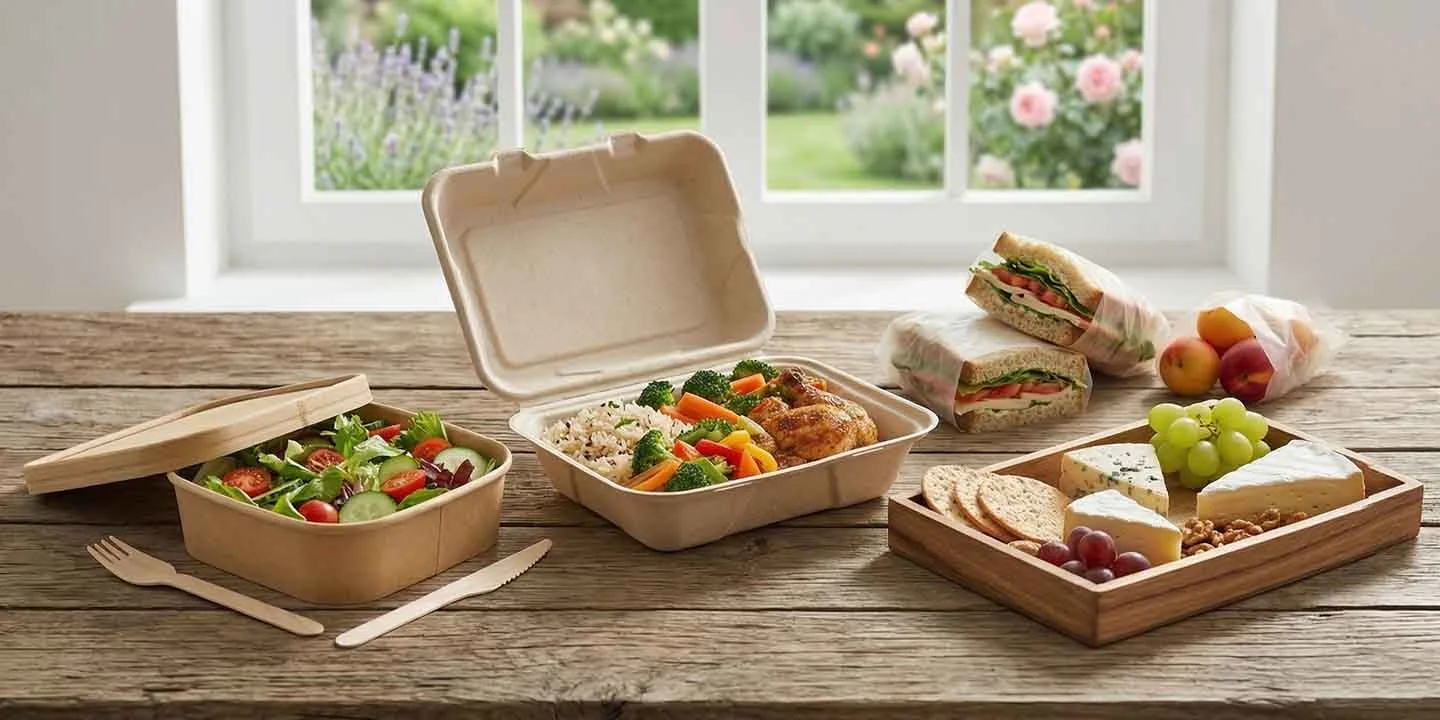
Plant Fiber Packaging: It is made from natural fibers of plants, such as sugarcane, wheat, bamboo, and recycled paper, and it is strong enough to keep hot and cold food. It is an environmentally friendly alternative to plastic. And you could use this material for making food trays, take-away boxes, cups, plates, etc.
Palm Leaf Plates: These are made from fallen palm leaves that are then cleaned and heat-pressed. It is 100% natural and chemical-free material that offers great heat and water resistance to your food. Moreover, you can make disposable plates and serving trays from this.
Bamboo Packaging: It is made from bamboo fibers or pulp. And we all know that bamboo is one of the fastest-growing plants, so this makes it a renewable source for gaining packaging material.
It is strong, lightweight, and it gives your food a very natural and premium look. And your food looks very expensive. You can use it for making food containers, trays, cups, cutleries that can be reused.
Hemp Packaging: Hemp packaging is made from hemp fibers. It is used to keep your food protected from moisture. This packaging material is very strong and durable.
Moreover, this is a perfect alternative to traditional paper and plastic packaging because it is biodegradable and eco-friendly. This is perfect for environmentally conscious brands and customers.
Wood-based Packaging: It comes from natural wood or wood pulp material. It is strong, breathable, and recyclable. And it is a perfect choice for fresh produce. Like you can make food crates, cheese boxes, and wooden trays.
Protein-based Films: These films are obtained from whey, soy, gelatin & collagen, and wheat gluten. They are totally edible and biodegradable films, which provide you with natural proteins. These provide your food with an excellent oxygen barrier, and they increase the shelf life of your food.
The best part about this kind of packaging is that it comes in some forms where you can even eat the film itself. You can use them to make food wraps, edible coatings, inner packaging layers, etc.
The table shows the comparison of above given materials to help you understand them better.
| Sustainable Food Packaging Materials Comparison | |||||||||
|---|---|---|---|---|---|---|---|---|---|
| Material | Mechanical Strength |
Barrier | Biodegradability | Food Safety |
Budget | Ease of Use |
Shelf-life | Food Compatibility |
|
| Protein-based Films | Low-Medium | Medium | High | High | Medium | Moderate | Medium | Dry foods, fruits, candies | |
| Wood-based Packaging | High | Medium | High | High | Medium-High | Easy | Medium | Dry foods, bakery, premium item | |
| Hemp Packaging | Medium-High | Medium | Very High | High | Medium | Easy | Medium-High | Snacks, bakery, frozen foods | |
| Bamboo Packaging | High | Medium | Very High | High | Medium-High | Easy | Medium | Ready-to-eat meals, takeout, snacks | |
| Palm Leaf Plates | Medium | Low-Medium | Very High | High | Low-Medium | Very Easy | Low-Medium | Ready-to-eat meals, dry & moist foods | |
| Plant Fiber Packaging | Medium | Medium | Very High | High | Low-Medium | Easy | Medium | Takeout, bakery, moist foods | |
As the technology is growing, it is bringing innovations in the food industry as well. Smart and advanced packaging has been introduced that can help monitor food quality and safety. It is basically used to detect spoilage or temperature changes to prevent your food from spoiling. And it also improves food safety.
They are basically used for fresh meat packaging, dairy products, and ready-to-eat meals. It also has several types, such as

Nano-composite Material: This material is made by adding tiny nanoparticles to plastic or biopolymers to increase their properties. They offer a better barrier against oxygen and moisture, and they make your packaging even stronger without adding thickness. This increases the shelf life.
You can use it for making your fresh meat trays, dairy packaging, and ready-to-eat meals.
Antimicrobial Films: These films are coated with natural or synthetic agents that are used to kill or slow down the growth of bacteria or fungi. This is basically used to keep your food safer for a longer period of time because it will reduce spoilage and waste. And it is the best discovery because it can replace the preservatives in some foods.
You can use them for making cheese packaging, fresh fruit, meat, and ready-to-eat meal packaging.
Oxygen scavenging Material: This is quite an interesting material because it absorbs oxygen from inside the package. It prevents food from spoiling because it prevents oxidation. And it is ideal for oxygen-sensitive products to increase their shelf life without changing the food's taste.
This material is used for making chips, coffees, baked curds, packaging, you know, packaging.
Moisture-absorbing Material: This material, like silica gel or specialized "soaker pads," is quite interesting because it removes the excessive moisture from your packaging and prevents sogginess. It keeps your food fresh by protecting the crispiness and texture of your food. And it does not let the mold grow inside the packaging.
You can use this material for making dry beef packaging, cereal boxes, baked good boxes, and nut boxes.
Time-temperature Indicator Labels TTI: This type of packaging changes color based on temperature exposure over time. It alerts the retailers and consumers if the food has been improperly stored. Moreover, it also helps them maintain the safety and quality of food and reduce food wastage.
You can use this material for making dairy boxes, frozen food, and fresh seafood, and it is also used in the medicine industry as well.
Gas sensors are used as a smart packaging component to detect the gases that are released when food starts to spoil. These gases include oxygen or carbon dioxide. In this way, the manufacturers or retailers get to know that the food is fresh and safe in real time.
RFID and NFC tags are digital tracking tools that are used in the packaging to monitor the location, temperature, and handling history of the food. It is used to keep the supply chain transparent and reduce losses. It also allows customers to access product information by only scanning the QR code with their phones.
The table shows the comparison of the above-given materials to help you understand them better.
| Smart & Active Packaging Technologies Comparison | ||||||||||
|---|---|---|---|---|---|---|---|---|---|---|
| Material / Technology |
Primary Function |
Best Use Case |
Shelf-life Extension |
Monitoring / Tracking |
Cost | Ease of Use |
Regulatory Issues |
Durability | Sustainability | |
| RFID & NFC Tags | Track & communicate info | High-value or perishable foods | Low | High | Medium-High | Easy | Minimal | Durable | Moderate | |
| Gas Sensors | Detect gases (O₂, CO₂, ethylene) | Fresh produce, meat, seafood | Medium-High | High | High | Moderate | Moderate | Moderate | Low | |
| Time-Temperature Indicator Labels (TTI) | Indicate temperature abuse | Frozen/chilled foods | Medium | Medium | Low-Medium | Very Easy | Low | Single-use | Moderate | |
| Moisture-Absorbing Material | Absorb excess moisture | Bakery items, dried foods | Medium | Low | Low | Easy | Low | Moderate | Moderate | |
| Oxygen Scavenging Material | Remove residual oxygen | Meat, snacks, oils | High | Low | Medium | Easy | Moderate | Moderate | Low-Moderate | |
| Antimicrobial Films | Inhibit microbial growth | Meat, poultry, ready-to-eat | High | Low | Medium-High | Moderate | High | Moderate | Low-Moderate | |
| Self-Healing Polymers | Repair small damages | Flexible packaging | Medium | Low | High | Moderate | Moderate | High | Low | |
| Nano-Composite Material | Enhance barrier, mechanical, and antimicrobial properties | Premium/high-tech packaging | High | Low-Medium | Very High | Moderate | High | High | Low | |
Metal is a material that is used in everything. So how can food packaging be left behind? It provides a barrier against light, oxygen, and moisture to your food by extending its shelf life. This material provides maximum protection to your food and is ideal for long-term food storage. It is totally recyclable, and you can use it for keeping your foods like canned food, beverages, and foil wraps.
It has different types like aluminum foil trays, cans, tinplate steel cans, etc.

Tinplate is a steel-coated material that has a thin layer of tin. It is safe for direct food contact and fully recyclable. It is ideal for canned foods, beverages, and airtight food containers. Because it prevents corrosion and protects food from contamination. It offers excellent strength and a long shelf life.
| Tinplate Coating Polymers Comparison | ||
|---|---|---|
| Polymer | Property | Application |
| Vinyl Compounds | Resistant to acid and alkaline products, good adhesion and flexibility, but not suitable for high-temperature processes like retorting | Used for canned fruit juices, beers, wines, and carbonated beverages; also for exterior coatings |
| Epoxy Phenolic Compounds | Acid-resistant, suitable for acidic products; good as a base coat under vinyl and acrylic enamels; flexible with good heat resistance | Used for steel cans for beer, meat, fish, soft drinks, fruits, and vegetables |
| Epoxy Amine Lacquers | Excellent heat resistance, adhesion, and abrasion resistance; flexible; produces no off-flavor | Used for dairy products, beer, soft drinks, and fish |
| Phenolic Lacquers | Resistant to acid and sulfide compounds; inexpensive | Used for acidic fruits, meats, soup, fish, and vegetables |
| Polybutadiene Lacquers | Good adhesion, high heat, and chemical resistance | Used for soups, soft drinks, beer, and vegetables (if zinc oxide is included in the coating) |
| Acrylic Lacquers | Expensive, heat-resistant, and provides an excellent white coat | Used for both internal and external coating of fruits and vegetables |
Aluminum cans are lightweight and durable and can be fully recycled. Moreover, aluminum cans provide excellent protection from light, moisture, and oxygen. Many food brands use them to keep their beverages and canned food protected and stored for a long period of time.
It is a strong material that is used for preserving food for a long period of time. This makes it an ideal storage material for canned food and beverages. This material provides an excellent barrier against contamination, oxygen, and moisture. And due to this, the food stays audible for a longer period of time.
The table shows the comparison of the above-given materials to help you understand them better.
| Metal Can Packaging Materials Comparison | |||
|---|---|---|---|
| Factor | Tinplate | Aluminum Cans | Steel |
| Tensile Strength | Moderate | Lower | Very high tensile strength |
| Hardness Test | Moderate | Softer than tinplate and steel | Very high hardness |
| Fluting Test | Moderate | Less suitable for fluting | Excellent fluting |
| Cost-effectiveness | Moderate | Expensive | Very cost-effective |
| Sustainability | Recyclable and reusable | Highly recyclable; lightweight reduces transportation emissions | Recyclable and widely available |
| Protection | Excellent protection | Good protection | Strong protection |
| Ideal For | Food cans, beverage cans, and packaging where corrosion resistance is critical | Soft drinks, beer, juice, lightweight beverage packaging, and portable food containers. | Bulk storage, heavy-duty cans, shipping containers, and structural packaging. |
| Not Ideal For | Heavy-duty packaging or very large containers (may dent under extreme pressure) | Corrugated packaging or situations requiring high strength, dent-prone. | Lightweight, portable beverage cans are not ideal for items where transport weight matters. |
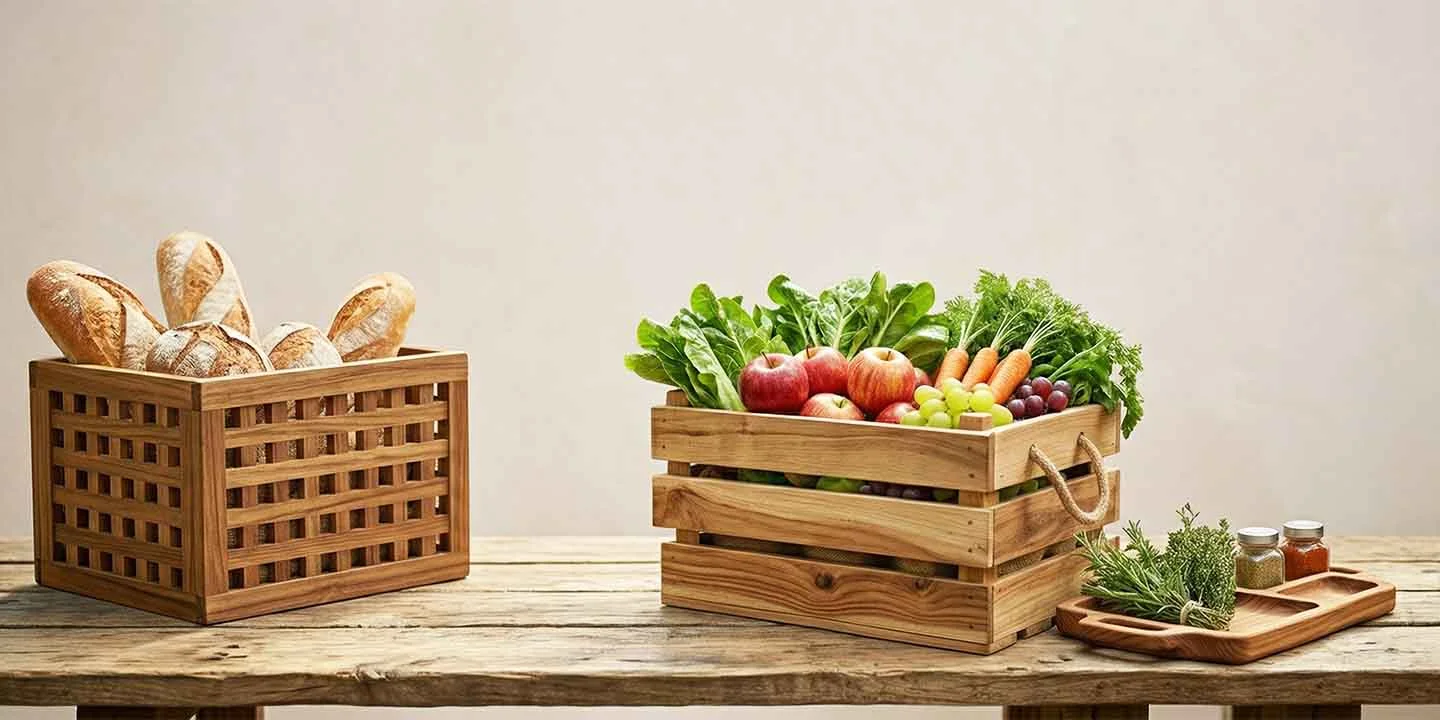
Wood packaging is made from natural wood or processed wood products. This material is strong and durable. Moreover, it is breathable, which helps your fresh produce to maintain its freshness and aroma. They are natural and eco-friendly, but the only problem with this type of packaging material is that it is expensive and costs a lot.
Fabric material packaging is made by using natural or synthetic fibers to wrap or store food. This material is reusable and washable. By using this packaging style, you can actually reduce the need to buy food packaging again and again.
They give you a handmade and premium look. You can use them to make bread bags, produce bags, tea and coffee sachets, gift food packaging, etc.

Cotton is a soft, breathable, and reusable packaging material. This is eco-friendly and gives your packaging material a natural and premium look. It is used for wrapping dry foods, bread bags, and fresh fruits.
Jute and burlap are mostly used in gift packaging as an eco-conscious packaging material. It is a durable and strong material that is totally biodegradable and has a rustic, natural appearance.
Linen adds a high-end look to your product. It is a practical, breathable, strong, and reliable source for specialty foods or artisanal items.
A table is given below comparing all the materials on the basis of different factors to know which suits your food product the best.
| Food Packaging Materials Comparison | ||||||||
|---|---|---|---|---|---|---|---|---|
| Materials | Shipping friendly |
Cost-Effective | Best for solids |
Best for liquids |
Durability | Eco-Friendly | Protection | |
| Cardboard/ cardstock | Short distances | Yes | Yes | No | High | More | High | |
| Paperboard | Short distances | Yes | Yes | No | Medium | More | Medium | |
| Wood | Long distances | No | Yes | No | Medium | Less | Medium | |
| Glass | Long distances | No | Yes | Yes | High | Less | High | |
| Compost material | No | Yes | Yes | No | Medium | More | Medium | |
| Kraft | Short distances | Yes | Yes | No | Low | More | Medium | |
| Fabric | No | No | Yes | No | Yes | No | Low | |
| Metal | Short distances | No | Yes | Yes | High | No | High | |
| PVC/PET | Long distances | Yes | Yes | Yes | Medium | Less | High | |
It is very important that food packaging material complies with the food safety standards and regulatory authorities. You must use food-safe and environmentally conscious packaging material.
This will not only protect your customers' health but also protect you from legal procedures like penalties, recalls, or product bans. For regulatory compliance in your packaging material, test your product for safety factors. Such as whether it has chemical leaching or toxicity in it. This implies brand credibility and ensures that your consumer is buying a health-conscious and responsibly packed food.
Your packaging material should be certified by the following authorities.
The Food and Drug Administration (FDA), the Forest Stewardship Council (FSC), the National Institute of Standards and Technology (NIST), BPI Certified, and comply with ASTM D6400 and the Federal Trade Commission (FTC).
All of the above certifications show that these materials are unbleached and PFAS-free. They do not have fluorine or chlorine chemicals, which means they are ideal for those people who have allergies or irritation.
“NO BPA, NO PFAS, and NO chlorine chemicals + 100% compostable and biodegradable = zero waste, zero guilt, and full health with protection.”

Choosing the right food packaging materials requires understanding your product, your customers, and your business goals. The right choice protects food quality, supports your brand, and ensures compliance with safety standards.
The tables show different types of food with their categories. You can choose your types based on their requirements. Some examples of foods are also given for your ease.
| Food Types Packaging Requirements | |||
|---|---|---|---|
| Types | Category | Requirements | Examples |
| Non-Perishable Foods | Dry/Shelf-Stable | Less water content, and it needs proper moisture resistance to maintain its dry nature | Grains, Dried goods, Canned goods, Condiments |
| Semi-Perishable Foods | Preserved and Pasteurized Products | Medium water content and needs to be protected from water. | Potatoes, tomatoes, onions, apples, berries, Bakery products, and garlic |
| Perishable Foods | Frozen or Refrigerated Products | High water content and do not need that much protection from water. | Dairy products, Fresh meat, poultry, Fresh fruits, vegetables, Eggs, cooked leftovers, Jams, sauces, and fresh juices |
| Oily Foods | Spillable and Greasy | Zero water content and need full moisture resistance | Sauces, cooking oils, salad dressings, mayonnaise, margarine, etc. |
Like every person has their own nature, the same goes for the food. Every food has its own requirement for packaging material that you need to understand, as every food is different.
Temperature-sensitive foods need insulation or cold-resistant materials.
Ready-to-eat meals need microwave-safe packaging.
Fresh fruits and vegetables require breathable packaging for ventilation.
Processed food needs airtight options like metal cans or aseptic cartons.
Benefit for your business: “The main purpose of any packaging is to preserve the flavor and the texture of your food. This will not only increase the shelf life of your product but also reduce your food waste.”
When we go to the market, it is not like we peek into every package or packet of food. Then how do we select any product? Being shoppers ourselves, we only pay attention to the product branding.
That packet of your brand interacts with the customers and lures them to buy your product. So you need to ask yourself a few questions before launching your product into the market:
Is your product packaging good enough to compete with the competitors on the market shelf? Will it easily attract a customer's attention with its display?
Is it easy to store and handle?
And the most important question: Does it reflect your brand's identity and values?
Outcome of discussion for you: “So you need to understand that eye-catching and well-designed packaging not only increases your brand recognition in the market. But it also increases sales by influencing a customer's purchase decision.”
Now, just imagine you are a customer, and you ordered a glass jar of pickles from your favorite brand. And when that order arrived at your doorstep, and you opened up the box, you found out the glass jar was broken. Your pickles are wasted, and there is a mess everywhere at your doorstep.
“What will be your experience? Exactly, you are never going to order the food from that brand again.”
The same is the case with your customers. You need to deliver your customers' orders in such a way that the product inside the packaging does not leak, contaminate, or get damaged during shipping.
Our recommendation: “So we always recommend that your food packaging be reliable and durable to withstand shipping, stacking, and handling. This will not only protect your product from getting wasted but also increase your customers' trust in your brand, making them your forever customers.”
Note: By the way, if you want high-quality glass products like Mason jars, canning storage jars, or honey jars. You can get them at wholesale rates with free shipping from us.
Packaging that is easy to open, reseal, and store is a blessing in disguise for a customer. And most of the time, customers use a certain portion of the product, but the other is kept for further use.
And if they are not properly sealable or storable, then the money of the customers gets wasted. And with that, their previous good experience with your brand gets wasted.
How can you overcome this? You can improve your customers' experience by providing them with the convenience of storing and reheating their food product.
“So you can say that customer experience and their repeat purchases increase with your convenient packaging.”
Selling food is not just a business. It is a big responsibility for your consumers' health, and you cannot play with your customers' lives. You need to make sure that your material is lead- and bisphenol-A (BPA) free.
Always go for food-grade quality material. Because if your brand's reputation increases, so does your revenue.
Note: Whether you have a small business or a large one, if you want to give your customers quality food box material. You can contact us for our sustainable packaging at discounted rates.”
Not all the customers in the market come for a standard shape or size of the product. Some want something unique and different-looking. This requirement can be based on their taste or budget sometimes.
So, if you want to target those customers, then you can introduce the market to your customized sizes, shapes, and printed design packaging. This can help you stand out in the market, and you can increase your brand identity by communicating your brand's success story clearly with your customers.
“You can give them what no one else is giving, and you can make them your fan.”
Moreover, if you want to learn more about “How To Choose The Right Food Packaging For Your Product,” then you can read our comprehensive blog on our website for a better understanding.
It is totally wrong that you are just going to sell your product at a lower cost, and you are just compromising on food safety and product quality.
If you do this, you'll not only lose your customers but also brand trust in the market. You can invest in reliable materials from the brand, and you can go for bulk purchasing.
What we suggest: There are many trustworthy manufacturing engineers in the market, like “MyBoxPrinting”, who are providing long-term value rather than short-term savings. You can buy your packaging products, which are made with durable and reliable quality, at bulk rates from us.
You need to consider a few details to choose the right food packaging materials for your business. These include your product’s needs, brand image, customer convenience, regulatory compliance, sustainability goals, and budget. When you provide your customers with the right packaging. You gain your customers' trust and support business growth.
Food packaging materials are not just limited to supermarkets. There are different industries that use them to protect and preserve their food products. Moreover, they are also used to present their products to increase brand value. There are different industries mentioned that are getting benefits from this material, and it gives you a reason why choosing the right packaging material for you is important as well.

The bakery and confectionery industry's main purpose is to maintain the freshness of the product. The right kind of packaging material prevents their delicate items, like cakes, cookies, and chocolates, from crushing and breaking. Moreover, it increases their displayed brand identity. They use packaging like paperboard boxes, plastic wraps, and biodegradable trays.
The beverage industry pays more attention to choosing the right kind of material because it needs to protect its liquid quality and prevent any kind of contamination. Moreover, the right material will provide their juices, soft drinks, and beverages a premium look. That's why they prefer packaging types like glass bottles, PET bottles, aluminum cans, and carton packs.
The dairy industry needs to maintain cold temperatures, which can prevent spoilage of its milk, yogurt, cheese, and butter. That is why they use HDPE bottles, PET containers, aseptic cartons, and vacuum packs. This kind of material not only keeps their products safe until they are consumed but also increases the shelf life of their products. But it also gives brands a way to deliver themselves to customers.
The ready-to-eat food industry needs protection of food from temperature fluctuations so that it can prevent freezer burn and offer convenience for the customers. That is why they use food packaging like temperature-controlled packaging and multi-layer plastics, insulated foams, and microwave-safe trays.
The snack and confectionery industry is entirely based on the crispness and crunch of products. So it is very important to maintain the crispness and crunchiness of their snacks. To keep their snacks protected from sogginess, they use flexible pouches, multi-layer films, and resealable packs to prevent moisture contamination. And this also increases their brand visibility on the shelves.
Fruits and vegetables can easily bruise and degrade if they are not properly packed in the ventilated packaging material. So they use corrugated boxes, molded pulp trays, and biodegradable films, which not only provide protection from bruises and other types of damage to the fruits. It also extends their shelf life during transport.
The meat and seafood industry is very delicate because a little change or damage can cause bacterial growth and decrease the shelf life of these foods. So to preserve the freshness, this industry uses vacuum packs, modified atmospheric packaging (MAP), controlled atmospheric packaging (CAP), and antimicrobial films.
The health and nutrition industry basically deals with the nutritional powders, vitamins, and supplements, which need proper protection from moisture, light, and contamination. So they use packaging material like sachets, jars, bottles, cartons, etc.
In the catering field, safe transportation of meals is very important. Moreover, maintaining product presentation is another task. So they use eco-friendly options like disposable biodegradable containers, paper boxes, and foil trays.

Medicines are made with a combination of different chemicals that need to be safe. Moreover, it is important to maintain regulatory compliance for medical nutrition products. That is why the pharmaceutical and medical industry uses tamper-evident bottles, blister packs, and airtight containers. They not only prevent contamination but also make sure that they are safe and their medicinal nutrition stays protected.
You can use packaging material in charity and donation trusts for packing the food, clothes, and other important supplies in a safe way to deliver to people in need. These are very affordable material box options like corrugated boxes, paper, board, cartons, and fabric bags. They provide complete protection during the transport and shipping of donations.
Moreover, you can also use eco-friendly materials like craft paper, jute, and biodegradable packaging. These can also help reduce environmental impact and also cost less. In addition to all the details, proper labeling on packaging can help you build more trust. And it ensures that the stuff reaches the right place and the correct stuff goes to charity.
You can increase your customer satisfaction by modifying your packaging material with a few touch-ups, like
Do you know that advanced printing techniques can uplift the visual appeal of your food packaging material?
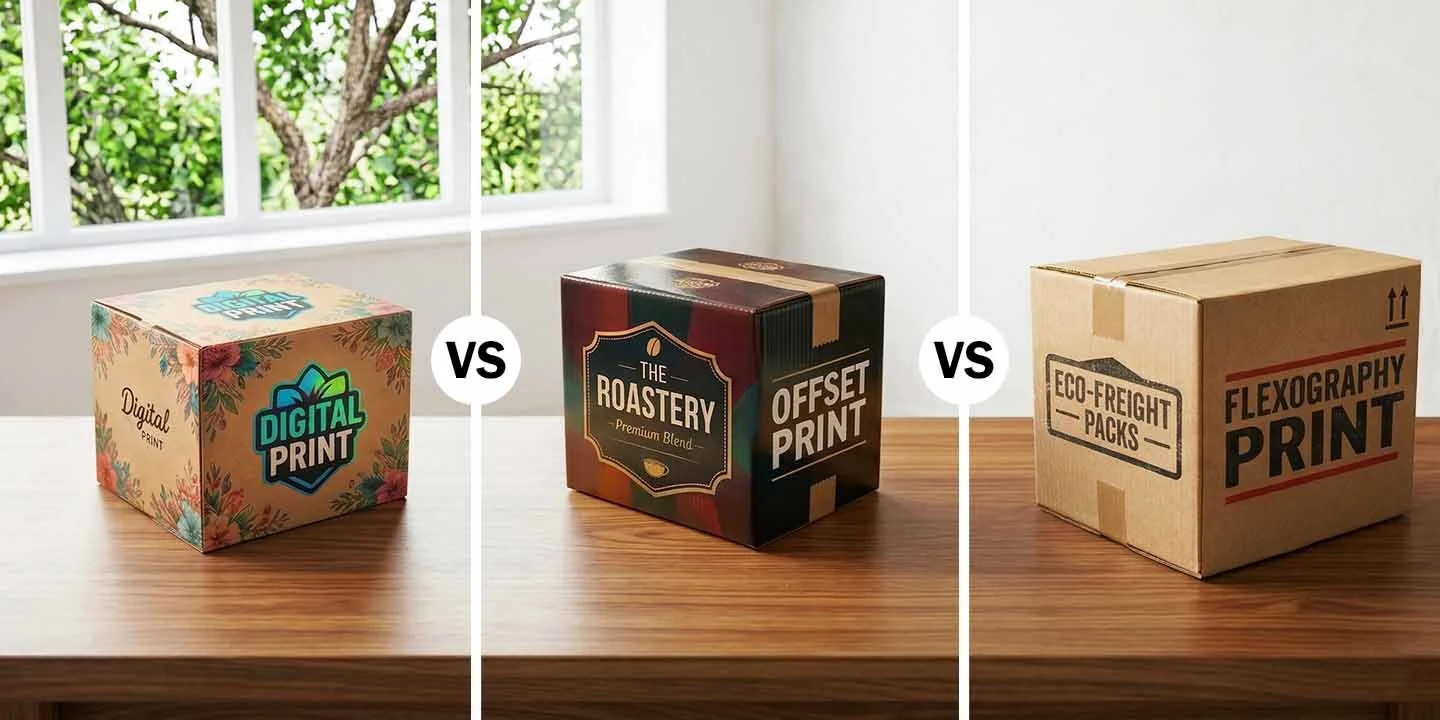
You can provide your customers with high-quality offset, screen printing, and digital printing in 2D and 3D digital designs to increase the beauty of your packaging material. This gives a sharp and vibrant packaging experience to your customers.
It is mandatory that your food packaging meet safety standards. So why compromise on ink selection?
Food-safe options are available in the market, like water-based, soy-based, and certain oil-based inks that help maintain compliance. They also reduce harmful chemicals leaching into your food. You can use these inks to present attractive packaging without compromising product integrity.
If you want to run your brand consistently across packaging, then you need precise color schemes. You can use CMYK and PMS color schemes to print your logos, brand names, and contact details on your packaging.
Moreover, your slogans and personalized messages for your customers strengthen your brand recognition and shelf appeal.
Note: “If you want to learn more about what collating means when printing, then you can read a detailed blog on this for more knowledge.”
MyBoxPrinting gives you a complete 2D and 3D visualization software package in which you can use Adobe Illustrator and Pacdora software tools. It can help you create a realistic layout and structural mock-up.
In this way, you can see your final product before the whole production. And this will reduce production errors and make sure that your final packaging is according to your brand identity.
Our recommendation: “Combine advanced printing, food-safe material, and professional designing tools. You can enhance your business customer perception, build trust, and ultimately drive higher sales profits.”
Every brand should keep one thing in mind before choosing the right packaging material. The customers have become more knowledgeable than before. So if you want to alter their buying decision from any other brand towards yours, then you need to provide them with clear and accurate labeling.
Most consumers want complete and transparent information, and food regulatory authorities also closely check labeling compliance. So it's not just your customers; you actually put labels on your product to make your brand trustworthy.
Best for you: It is best to label your food packaging with details of ingredients, nutritional values, manufacturing dates, expiry dates, food storage instructions, etc. You can add allergen warnings and other mandatory information to avoid any legal penalties and financial losses as well.
You can increase the safety and appearance of your food product if your food is packed in a premium kind of food packaging material. It will always attract everyone, from a single eater to a group of people who want to enjoy a quality meal. But can you do it? You can do it by adding a few touches, like finishes and coatings. There are some options
Gold and Silver Foil Stamping for a rich and eye-catching appeal
Matte and Gloss Lamination to enhance texture and visual contrast
Protective Coatings to improve durability and shelf life
Embossing and Debossing for a tactile, high-end finish
Spot UV and Soft-touch Coating to highlight key design elements.
Raised UV and Satin Finish for added depth and sophistication
If you want to turn your packaging into a powerful tool to attract major consumers, then you can enhance your packaging with little finishes and coatings. These will not only help your food stay safe and warm, but they will also keep your customers' hands oil and grease-free.
“MyBoxPrinting” is a leading brand in the food packaging material market. We are a trusted and reliable manufacturer in the market. We have helped many struggling and successful brands to come to a point where they can make more profit than before.

In the real-time example, MyBoxPrinting has helped a brand named “Dio Gourmet Chocolates." It was a brand that was struggling to stand on the market shelf. Even though their product quality was good, their chocolate bar boxes were also not bad. But the main thing we noticed was that it was not reflecting the premium value of their brand. Due to this, customers used to ignore the products and choose competitors with better-looking packaging. That's when the brand partnered with MyBoxPrinting.
The Challenge: Now, the main challenges that we faced were that
Their packaging was plain and unattractive.
Their packaging material is not right for chocolate because the product is temperature-sensitive. When the temperature increases, the product melts down, and their customers face a handful of spoilage problems.
They had no strong brand identity.
The packaging waste was high, which was costing them a lot.
And the customer attention towards their products on the shelves was very low.
The MyBoxPrinting Solution: We worked closely with the brand and restored its goals. So, what we did was make boxes instead of just boxes. We focused on building brand value with smart packaging.
We helped them design custom and eye-catching packaging that can match their brand story.
We used high-quality and eco-friendly materials that improved our customers' trust.
We gave them lightweight packaging to decrease their shipping costs.
Moreover, we added clean printings and finishes to give their brand packaging a very premium look.
The Results: When we changed all of these things, the impact of these changes was quick and clear. Their sales increased from 8000 dollars to 130000 dollars.
The products were getting more attention on the shelves of the stores.
Customers perceived their brand as more trustworthy.
Their products' packaging became premium and grabbed the attention of thousands.
Their sales increased because of the professional-looking packaging, and the brand gained stronger recognition and repeat customers in the market.
Most importantly, the brand's overall market value increased, and retailers took the products more seriously.
“Now they are working with us, and they have become our returning customers with 6-7 orders per year.”
Key Takeaway: We saw that the customers were willing to pay slightly higher prices because of the packaging, premium quality, and branding finishes.
This real-life example shows that packaging is not just a box. It is your very powerful branding tool. So you can also partner with MyBoxPrinting to increase your revenue and improve your business image in the market. We can help you reduce your costs and increase the brand's worth at the same time.
This is a very common question that comes to many brands when we talk about high-quality food packaging material in bulk. It does not matter if you want to pack a small amount of snacks or large food products.
“MyBoxPrinting is your go-to solution.”
At MyBoxPrinting, we help you select the right material based on your food type and storage needs. We also prefer your brand goals for increasing brand reputation in the eco-conscious food market. Moreover, we offer a wide range of food-grade materials, which include eco-friendly and sustainable paperboard, corrugated cardboard, biodegradable, and custom printed solutions.
And the best part is that you get wholesale bulk pricing. Moreover, we can fit any product size according to your requirements. You can choose from standard sizes to fully customizable packaging with your branding, logos, labels, and premium finishes.
So whether you have a small startup or have a large food business, we can make your ordering easier by providing you with wholesale rates and low minimum quantities. In the meantime, you can also expect from us a fast delivery with 24-7 customer service.
Food packaging material means any material that you choose to protect, store, and preserve your food. It should maintain the safety, freshness, and quality of your food product.
There are different types of materials available in the market, which are commonly used, like plastic, paper, cardboard, glass, metallic, eco-friendly plastic, plant-based, and biodegradable options.
You can choose the right material by selecting your material based on your food type, shelf life, storage needs, and regulatory requirements.
Yes, our food packaging materials are totally food safe, meet food safety standards, and are approved by regulatory authorities.
Proper labeling is very important for food packaging to give your customers transparency. Moreover, it provides product information and can help your business comply with food safety laws.
Yes, eco-friendly packaging material is totally worth it because it decreases the environmental impact and increases your brand image in the eyes of customers. You can gain more trust and satisfaction from your environmentally conscious customers through it.
There are many packaging partners in the industry, but they are not as reliable and trustworthy as MyBox printing. You can get the best deals for food packaging materials at wholesale rates. Moreover, we provide you with high-quality custom printed boxes and packaging containers at discounted rates.
For food packaging, you can use inserts that are made from molded pulp, foam, corrugated paper pads, or cardboard. They are excellent cushion providers and protect your products during shipping and transportation.
You can use materials and coatings like multi-layer laminates, metalized films, EVOH layers, and moisture-resistant coatings to keep your food safe from moisture. These coatings are best for providing protection against water vapors and humidity.
Yes, there are some studies that show that coatings can have a little impact on how packaging interacts with food. But if you use proper food-grade coatings, they can improve moisture and grease resistance, and they do not contaminate your food. And that is why My Box Printing is the best packaging partner that complies with the safety regulations from the FDA to provide their clients toxic-free and BPA-free packaging solutions.
Food packaging has evolved much more since it was first started. From selecting the right material for your small & large food items to making sure the food safety directly affects and impacts your product quality, customer trust, and business profitability. Your packaging material must comply with regulations to provide your customers with a healthy and safe food option.
Moreover, with rising material costs, shipping expenses are increasing, and there is tough competition from privately labeled brands. You can overcome all of these by providing your customers with our well-designed, competitively eye-catching packaging boxes. Moreover, at MyBoxPrinting, we offer high-quality and environmentally friendly packaging material boxes manufactured to improve your brand identity.
It will improve your self-appearance and customer satisfaction. You can go for custom branding, transparent labeling, luxury finishes, and advanced printing techniques to make your packaging a powerful tool for you. You can always choose the right food packaging material, and working with us, who are experienced packaging partners, we can help you protect your product and meet regulatory requirements as well, even without increasing the cost.
Our suggestions: Go for digital tools to track cost and manage orders better. Choose lighter and smarter packaging to reduce shipping costs. These are all small but smart changes that can help your company to stay competitive and protect your profits. And today, margin pressure is really challenging in the food packaging industry. Only companies that control costs, improve efficiency, and make smart decisions can survive and grow in this tough market.